
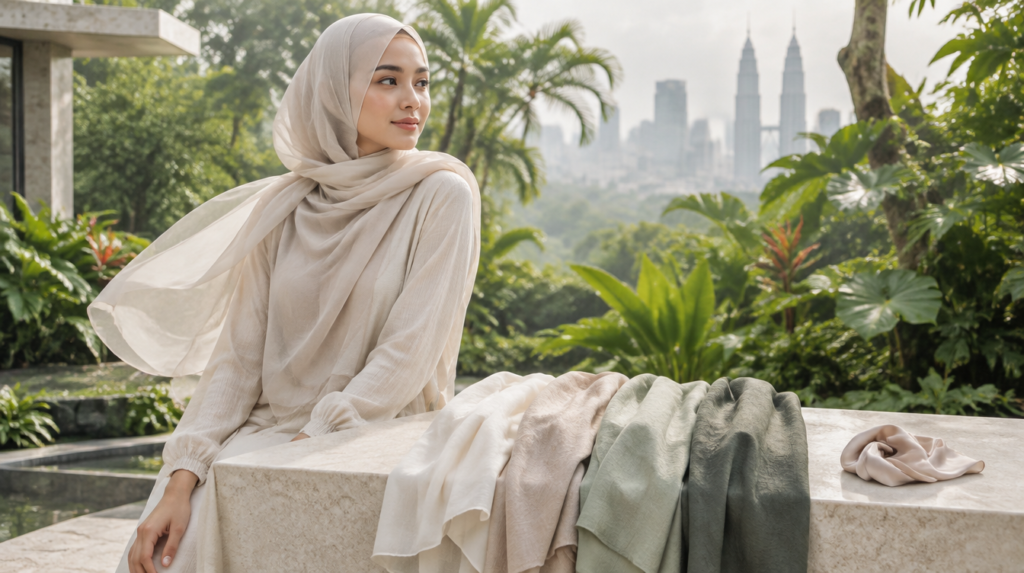
Chiffon, cotton, rayon, and linen are the most breathable choices for Malaysia’s heat and humidity, and any of the four works well for daily wear. Silk breathes surprisingly well too; it’s a natural temperature regulator, but it needs more careful laundering if you’re wearing it often in sweat and humidity.
Crepe and twill run warmer thanks to their added structure, better suited to air-conditioned settings than a full day outdoors.
Malaysia’s combination of high heat and near-constant humidity means moisture doesn’t evaporate off skin and fabric the way it would in a drier climate, which is why sweat feels more noticeable here even in fabrics that would feel fine elsewhere.
Sitting close to the equator, Malaysia doesn’t get the seasonal dry stretches that give some climates a break from humidity, so fabric choice matters year-round rather than just during a hot spell. The fabrics that perform best aren’t just lightweight, they’re also open-weave enough to let air move through and absorbent enough to pull moisture away from the skin rather than trapping it against you.
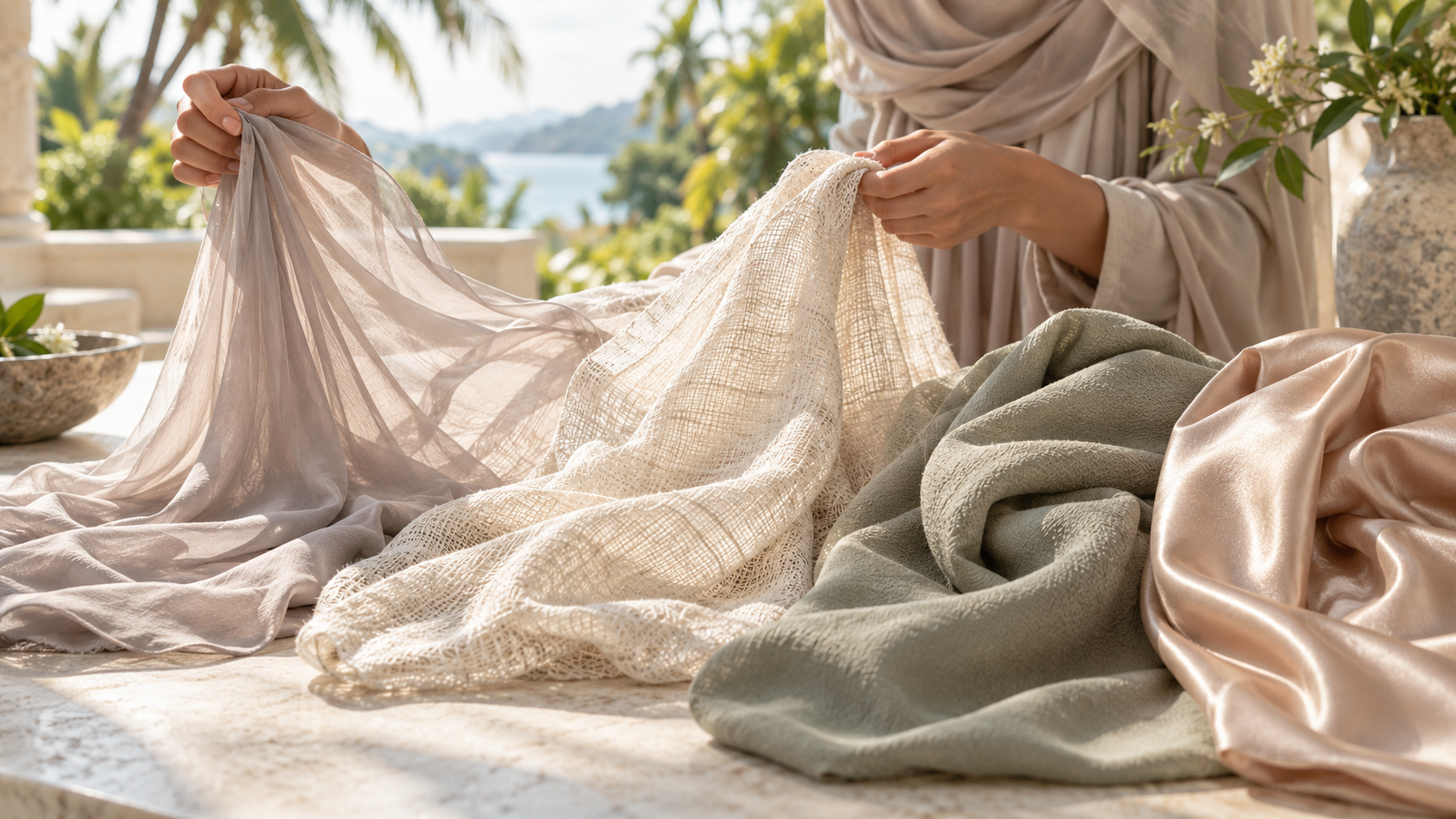
Thickness matters less than weave openness. A tightly woven thin synthetic can trap more heat than a slightly thicker, more open weave like linen, since airflow depends on the gaps between threads, not just how thin the fabric is overall.
Sheen is a surface property and doesn’t tell you much about breathability on its own. Cotton and silk have very different levels of sheen but perform similarly well in heat, since what actually matters is the weave and fibre, not how the surface reflects light.
Chiffon is about as breathable as it gets. Its sheer, open weave lets air pass through freely, which is why it’s one of the coolest options for a full day outdoors.
Cotton absorbs moisture well and breathes consistently, which is part of why it’s the most common everyday fabric choice regardless of climate. It won’t feel quite as airy as chiffon, but it’s dependable in heat.
Rayon is soft, absorbent, and drapes coolly against the skin, sitting close to cotton in everyday comfort with a slightly lighter feel.
Linen’s looser weave makes it genuinely one of the more breathable natural fibres available, on par with chiffon and cotton for keeping air moving. The trade-off is a coarser texture and a tendency to wrinkle, not reduced breathability.
If cotton and rayon are the two options you’re weighing for everyday wear, our cotton vs rayon scarf comparison breaks down how they differ in drape, care, durability, and comfort.
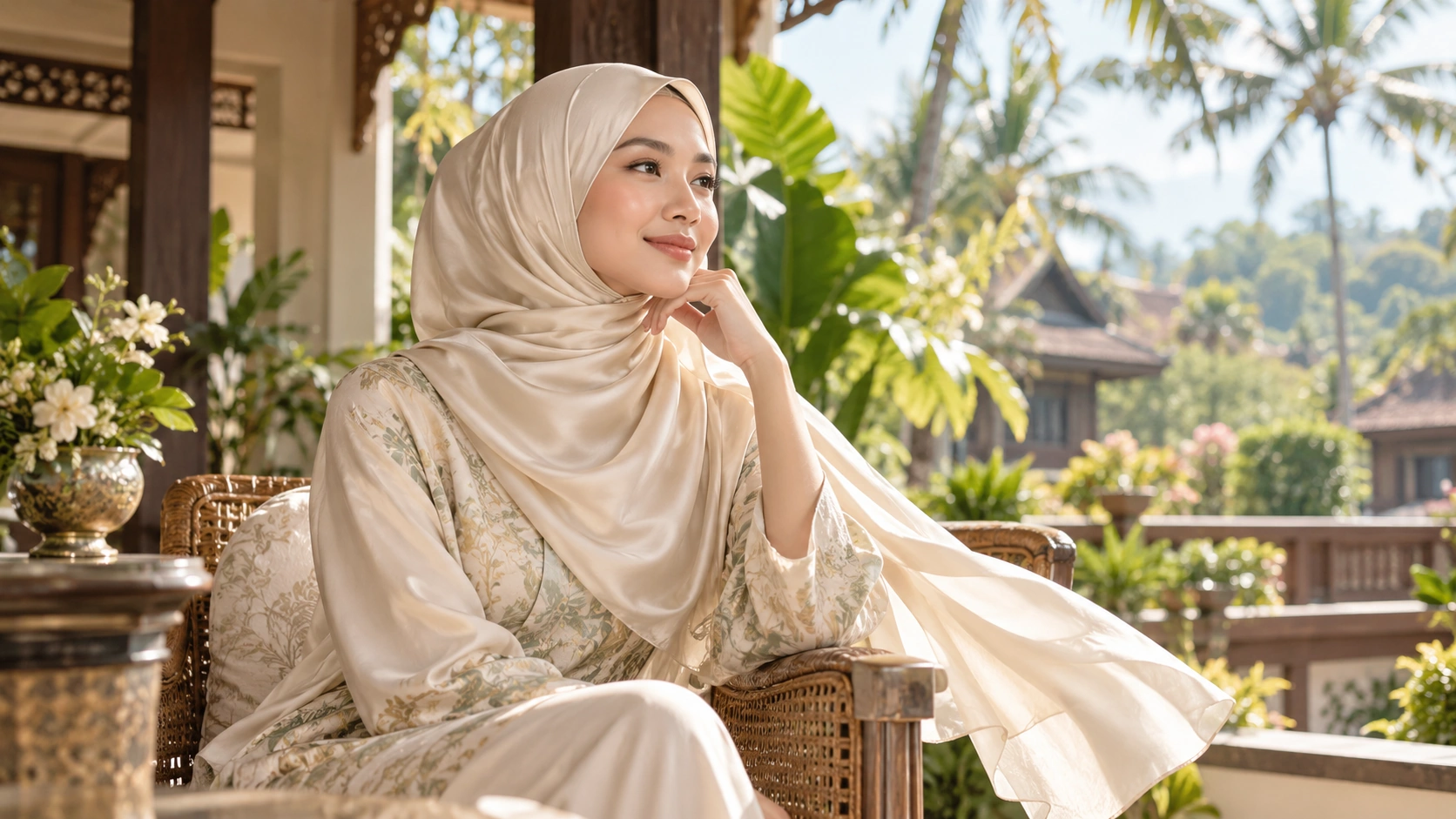
Yes, more than most people expect. Silk is a natural protein fibre that breathes well and doesn’t trap heat the way some synthetics do. The catch isn’t comfort; it’s maintenance. Silk worn daily in heat and sweat needs more frequent, more careful washing than cotton or chiffon, so it suits occasions and air-conditioned days better than nonstop daily wear in full humidity.
Because frequent wear in humid weather means more regular cleaning, it’s worth knowing how to wash and store a silk scarf properly without damaging its fibres or natural sheen.
Both, depending on conditions, which is exactly why it confuses people. Silk’s protein fibre structure regulates temperature rather than just insulating or just cooling, so it can feel warm in cool weather and breathable in heat.
That dual behaviour is a genuine property of the fibre, not a marketing claim, and it’s part of why silk works across more seasons than a purely cooling or purely warming fabric would.
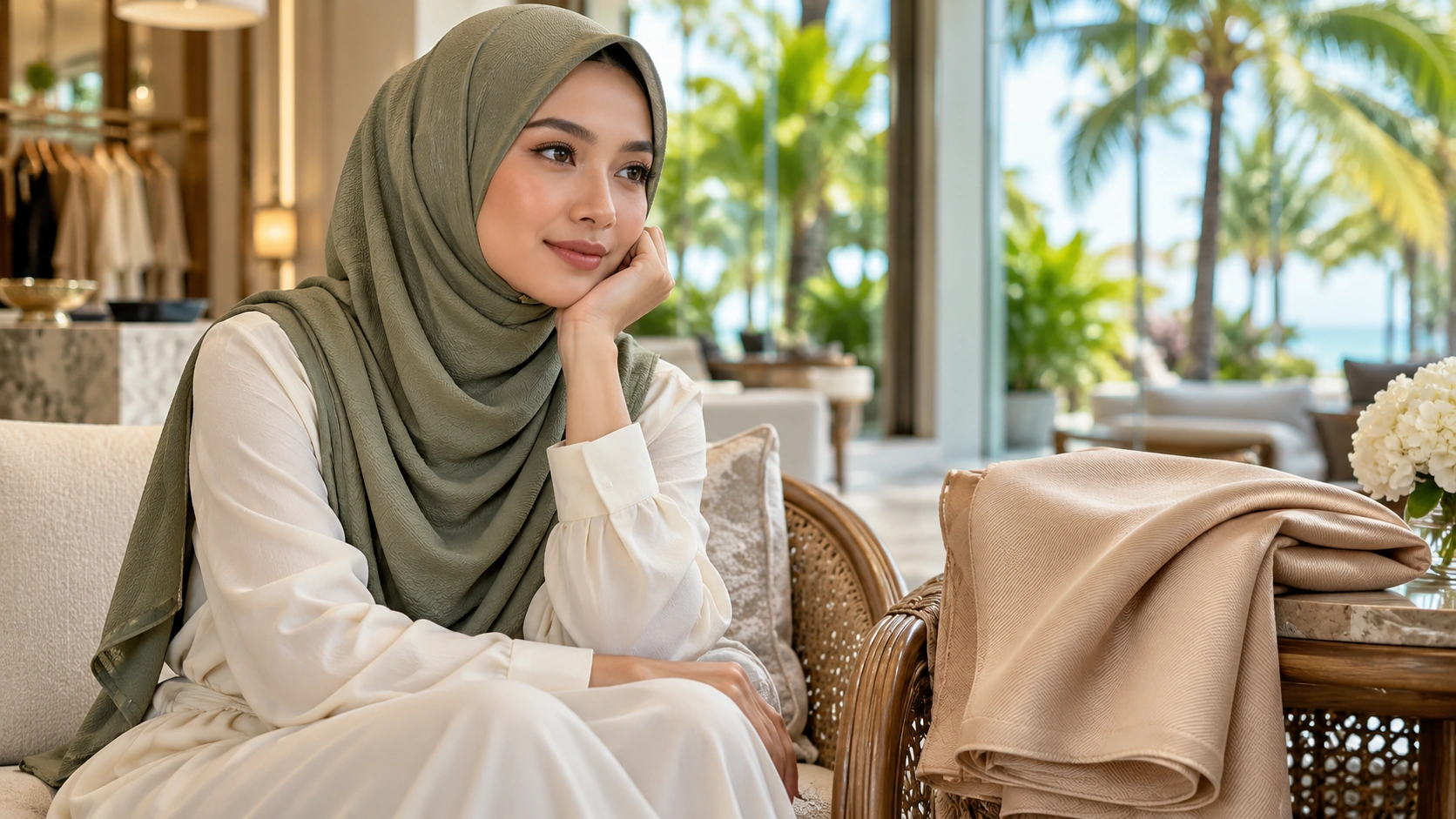
Both run warmer than the fabrics above, mainly because of their added structure and weight rather than the fibre itself. Crepe’s textured weave and twill’s diagonal structure give both fabrics more body and better hold for structured styles, but that same structure traps a bit more heat.
They’re better suited to shorter stretches outdoors, evenings, or air-conditioned settings than a full humid day. If you’re choosing between lighter and more structured options, our silk vs chiffon vs crepe comparison looks more closely at how each fabric differs in breathability, texture, drape, and grip.
How you wrap matters almost as much as what you wrap. A single, looser layer breathes noticeably better than a tightly pinned double layer, which sandwiches warm, damp air against the neck and traps it there.
On especially humid days, a simpler, looser style in a breathable fabric will often feel cooler than a more elaborate style in the same material, so the styling choice and the fabric choice work together rather than separately.
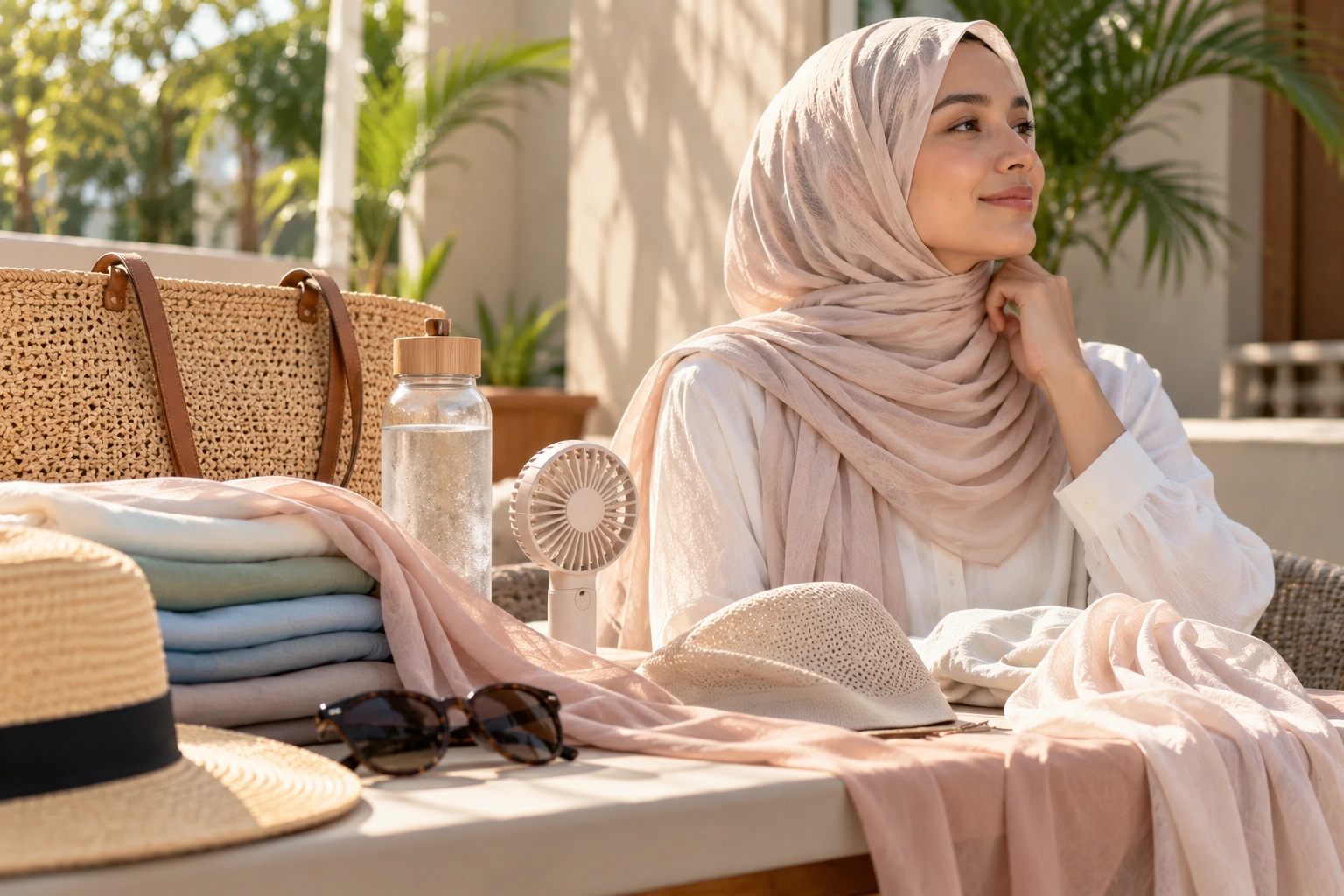
For a broader look at how these materials compare beyond hot weather, explore our complete hijab and tudung fabric guide covering the main fabrics, their feel, drape, care needs, and best uses
| Fabric | Breathability | Best For |
|---|---|---|
|
Chiffon |
Very high |
All-day daily wear |
|
Cotton |
High |
Everyday, low-maintenance
|
|
Rayon |
High |
Soft everyday drape |
|
Linen |
High |
Casual, textured looks
|
|
Silk |
Good, needs more care |
Occasions, air-conditioned settings |
|
Crepe |
Moderate |
Structured styles, evenings
|
|
Twill |
Moderate |
Durable, structured wraps
|