
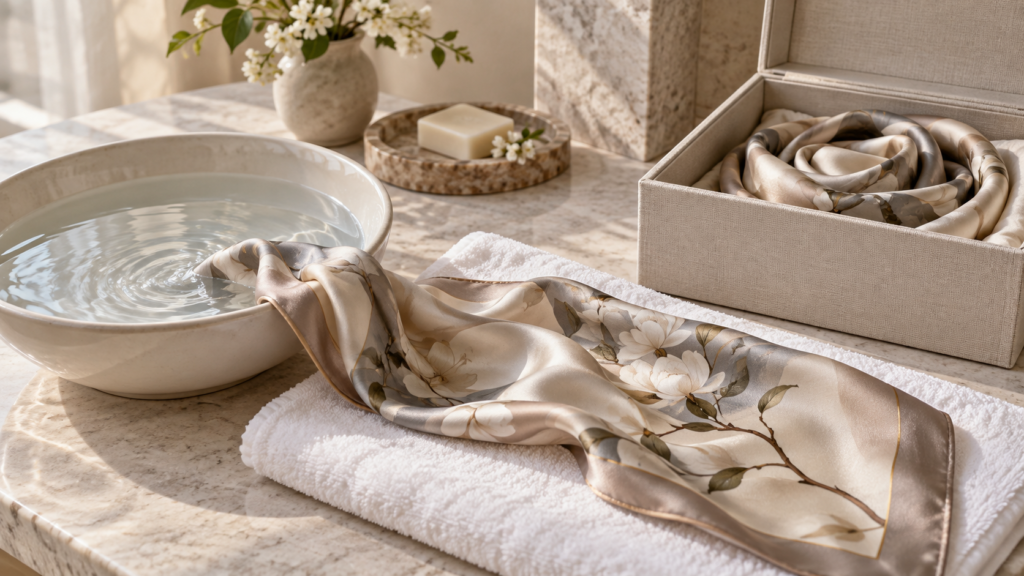
Hand wash in cool water with a mild detergent, skip the wringing, air dry flat away from direct sun, and store it loosely folded or rolled somewhere dry and dark. That’s the short version. The rest of this guide walks through washing, drying, ironing, stain removal, and storage in enough detail to actually follow, plus what to do if it gets wet by accident or picks up a stubborn smell.
Silk is a natural protein fibre, closer in structure to hair than to plant-based fabrics like cotton or linen, which is exactly why it reacts differently to washing. It’s noticeably weaker when wet, so wringing or twisting can stretch or tear the fibres in a way it wouldn’t when dry.
It’s also more sensitive to alkaline ingredients found in many regular detergents and to prolonged sun exposure, which breaks down the protein structure and dulls the natural sheen over time. None of this makes silk high-maintenance exactly, it just means the usual laundry habits that work fine on cotton aren’t automatically safe here.
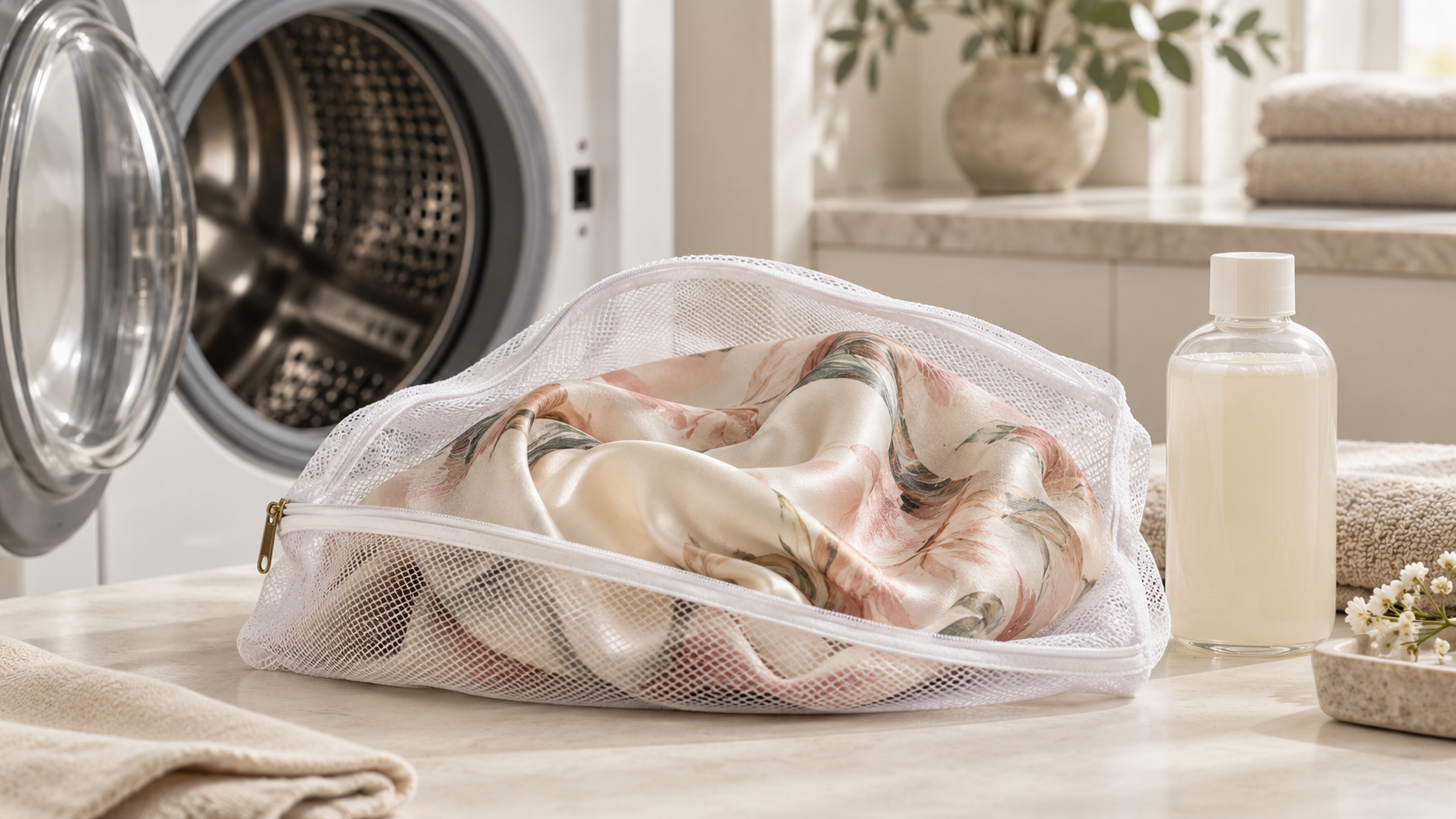
It isn’t the safest option. Machine agitation, even on a delicate cycle, can stress silk’s fibres and cause pilling or subtle sheen loss over time. If you genuinely need to machine wash, use a mesh laundry bag, the coldest water setting, a mild detergent, and the lowest spin speed available, then air dry immediately afterward.
Hand washing takes a few extra minutes but is the safer default, especially for anything from the Kehribar or Avandia collections you’d want to keep looking new for years.

Lay the scarf flat on a dry towel, away from direct sunlight and away from heaters or vents, and reshape it gently while it’s still damp so it dries to the right proportions.
Hanging a wet silk scarf can stretch it out of shape under its own weight, so flat drying is the safer method. A tumble dryer, even on low heat, is one of the fastest ways to damage silk and should be avoided entirely.
If you do iron, use the lowest heat setting your iron offers, ideally a dedicated silk setting, and iron while the scarf is still slightly damp or place a thin cloth between the iron and the fabric. Iron on the reverse side where possible to protect the sheen on the front.
Hang the scarf in the bathroom while you shower and let the steam relax the fibres, or use a handheld garment steamer held a few centimetres away from the fabric. Both methods remove light wrinkles without any risk of scorching, which makes them the safer default for anything you’re not confident ironing yourself.
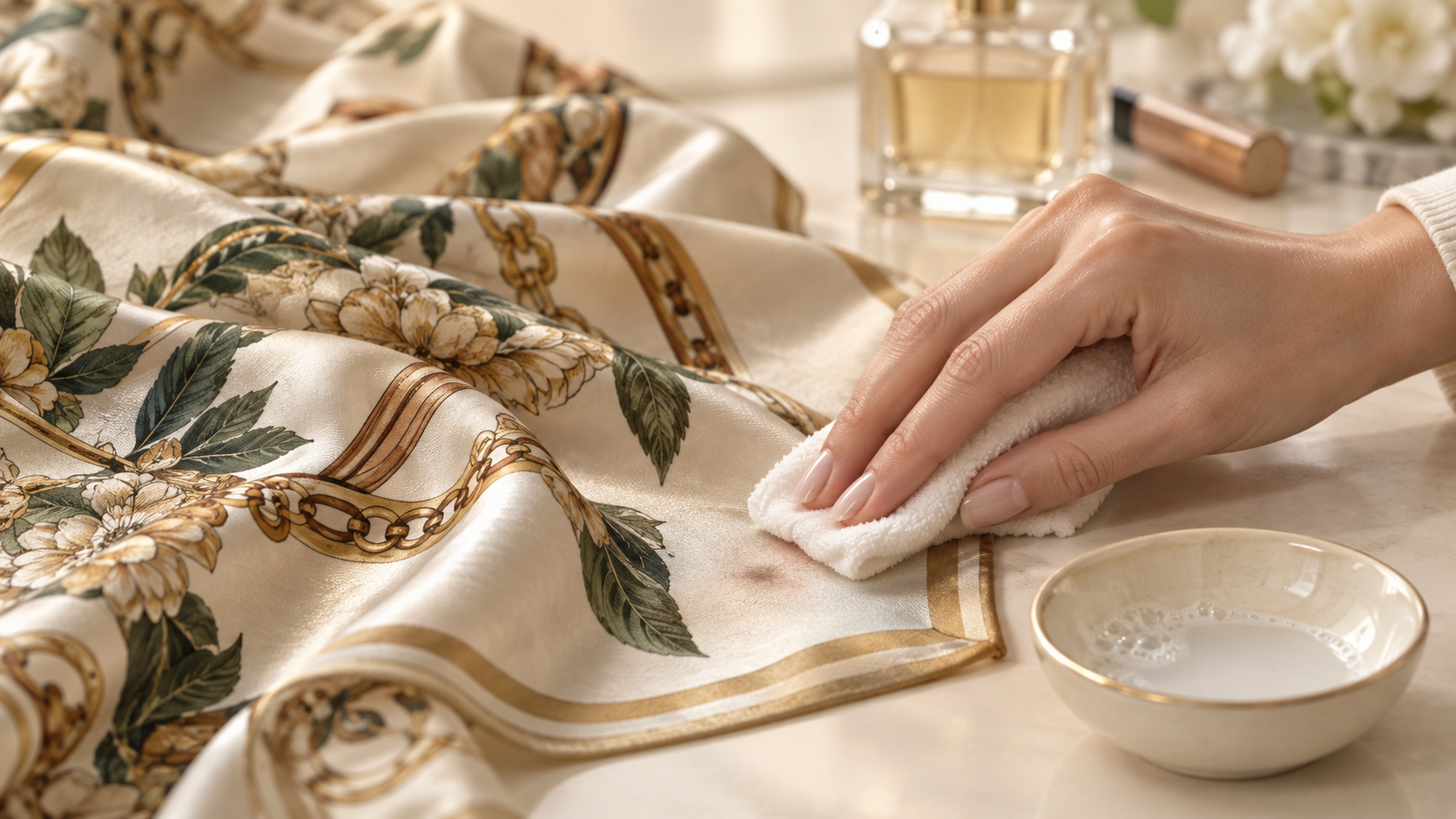
Blot, don’t rub. Rubbing pushes the stain deeper into the fibres and can damage the weave. Use a cool, damp cloth with a small amount of mild detergent, blot gently from the outside of the stain inward, then rinse the area with plain cool water. For oil-based stains or anything stubborn, a professional dry cleaner experienced with silk is a safer bet than repeated home attempts.
The easiest fix is prevention: apply perfume and makeup before putting the scarf on, and let perfume dry fully first, since silk absorbs readily and the marks can be difficult to fully remove afterward. This isn’t just a care tip, our Refund and Returns Policy doesn’t accept returns on items that show perfume or makeup marks, so avoiding them protects the piece either way.
Yes, an accidental splash or light rain won’t ruin silk on its own. The key is what happens next: don’t leave it balled up wet, since that’s what causes water spotting and colour bleeding. Lay it flat to dry as soon as you can using the same method described above.

At-home dry cleaning kits exist, but they use heat and enclosed steam that can be harder to control than a hand wash, and the risk of damage is higher for delicate silk specifically. For most scarves, the hand wash method above is both safer and simpler. Save professional dry cleaning for pieces with stubborn stains or for anyone who’d rather not risk a hand wash at all.
Fold loosely rather than pressing sharp creases, and vary the fold occasionally so the same lines don’t wear thin over time. Rolling instead of folding avoids crease lines almost entirely and works well for scarves you rotate often.
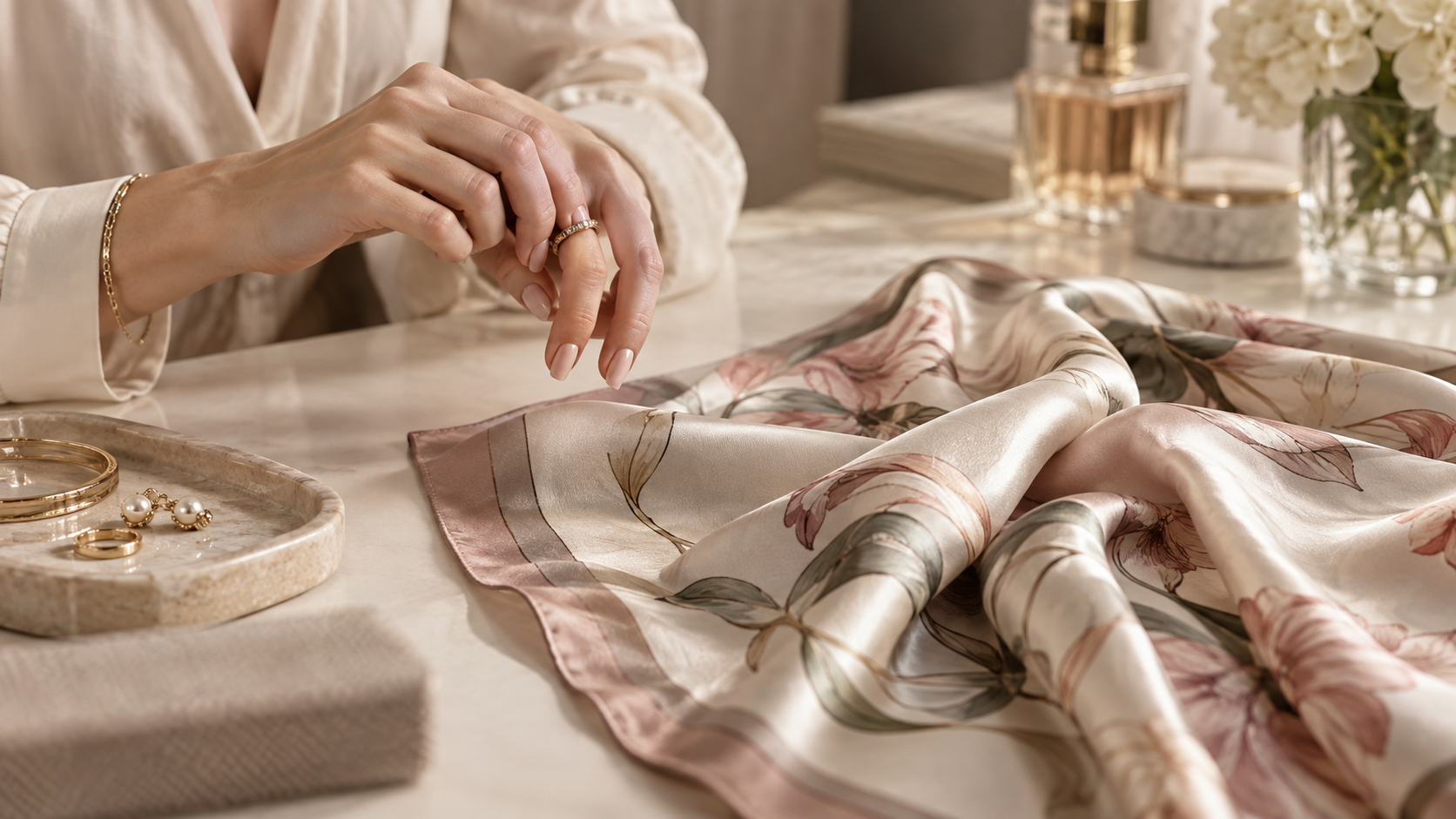
Most snags come from rough surfaces, jewellery, or Velcro catching the fibres, so it’s worth removing rings or bracelets before wrapping a scarf and storing pieces away from anything textured or rough-edged.
With reasonably gentle handling, a well-made silk scarf can genuinely last for years, which is part of what makes pieces like Kehribar and Avandia worth treating as an investment rather than a disposable accessory.