
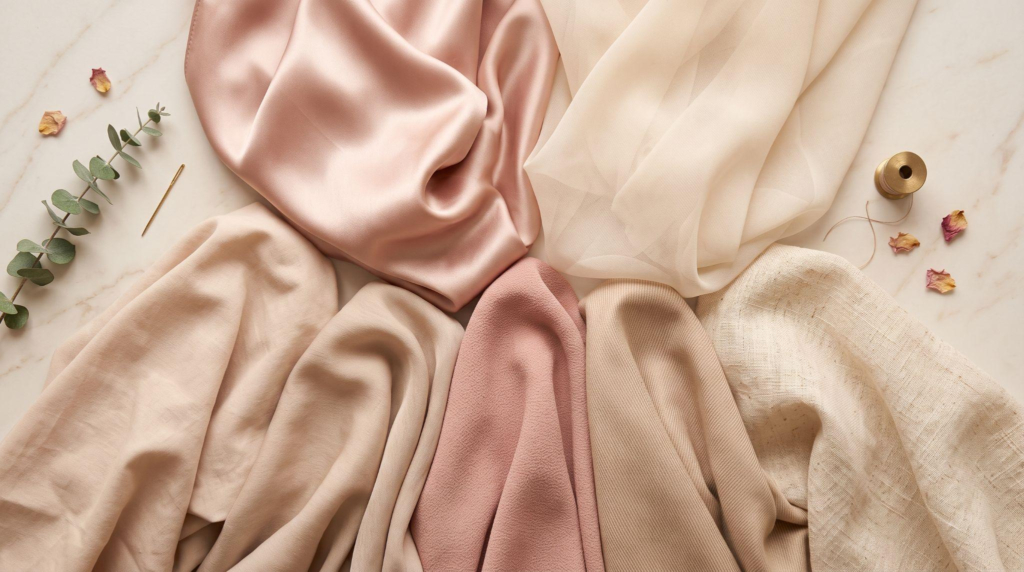
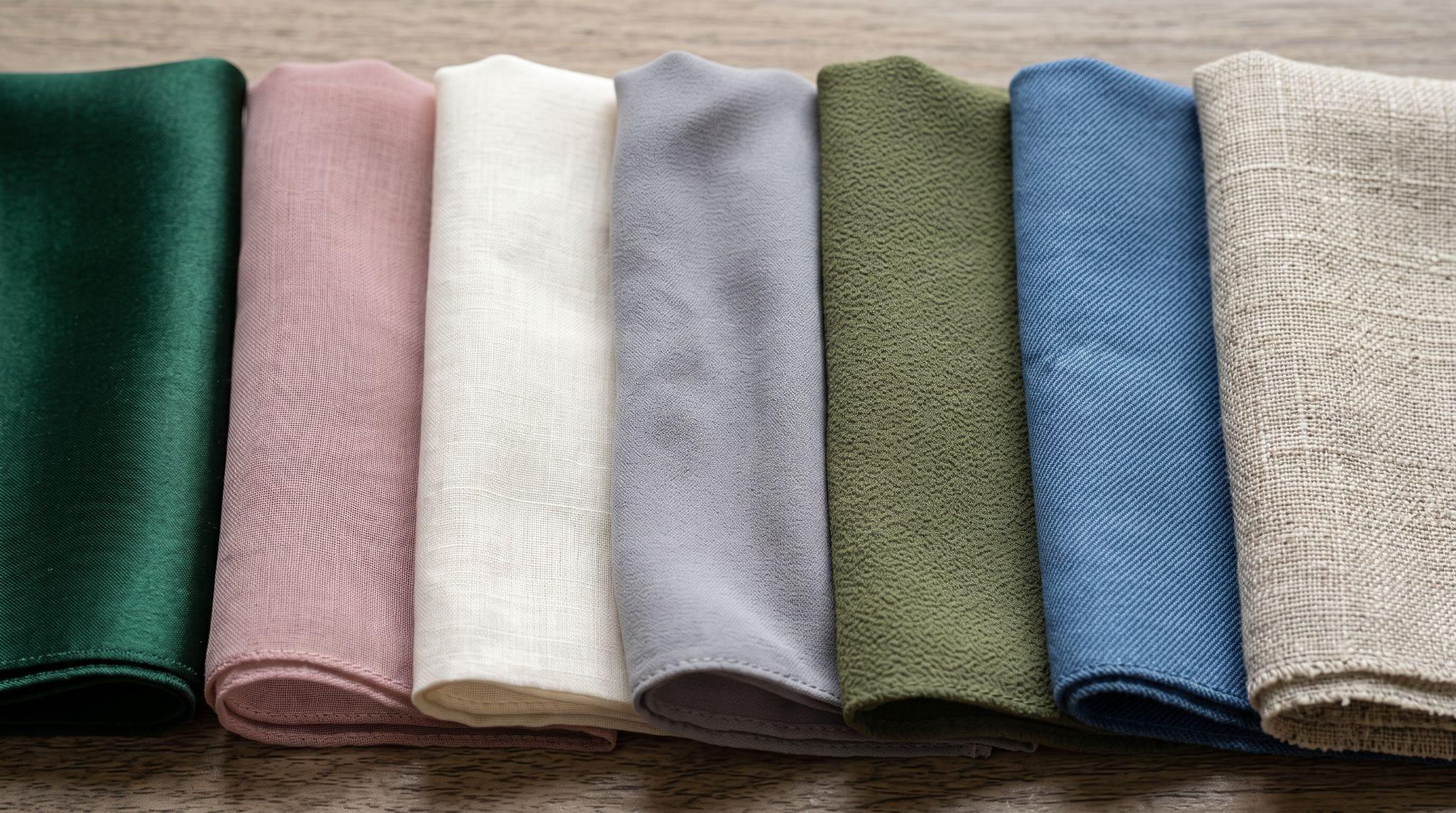
Benang Istanbul works with seven core fabrics: silk, chiffon, cotton, rayon, crepe, twill, and linen. Each one behaves differently on the head and in Malaysia’s climate, so the fabric you choose affects comfort, how the scarf drapes, and how much upkeep it needs. The short version: chiffon and cotton handle humidity best for everyday wear, silk and crepe suit occasions where drape and structure matter more than breathability, and twill and linen sit in between, favoring durability over delicacy.
Silk is the most premium fabric in our range and the material behind our Kehribar collection. It’s lightweight, has a natural sheen, and drapes in a way that stiffer fabrics can’t match. It also breathes better than most people expect, but it’s the most delicate fabric here, so it needs gentler handling than everyday cotton or twill.
Chiffon is sheer, airy, and one of the most breathable fabrics we carry. It holds pleats and structured wraps reasonably well for something this light, though sheerness means most people layer it over an undercap. It’s a strong pick for Malaysia’s daily humidity.
Cotton is the most forgiving fabric on this list. It’s matte rather than shiny, breathes well, and stands up to regular machine washing without much fuss. It doesn’t drape as fluidly as silk or chiffon, which makes it a practical choice rather than a statement one and a comfortable starting point if you’re still learning how different fabrics wear.
Rayon, sometimes labelled viscose, sits close to cotton in softness but drapes more like a lighter fabric. It’s semi-sheer, absorbent, and comfortable in heat, though it can lose shape slightly when wet, so it prefers a gentler wash than cotton does.
Crepe has a subtly textured, matte surface and holds its shape better than lighter fabrics like chiffon or rayon. It’s less prone to slipping around on the head, which makes it popular for structured, sculpted styles, and it tends to read as slightly more formal than chiffon or cotton.
Twill is defined by its diagonal weave, which is what gives it extra durability and a bit more structure than a plain weave fabric. It resists wrinkling better than most fabrics on this list and holds a wrap firmly in place, at the cost of being a touch heavier.
Linen is a natural fibre with a visible texture and strong breathability, which makes it genuinely cool to wear. The trade-off is that it wrinkles more easily than the others and has a coarser hand feel, so it suits a casual, textured look rather than a sleek one.
Chiffon, cotton, and rayon are the most breathable options in daily humidity, and all three are good defaults for regular wear. Silk breathes surprisingly well too, but it needs more careful laundering if you’re wearing it often in heat. Crepe and twill run slightly warmer thanks to their added structure, which makes them better suited to air-conditioned settings or evening wear than a full day outdoors.
Cotton and chiffon are the easiest fabrics to start with. Cotton is low-maintenance and forgiving of mistakes, and chiffon, despite being delicate, is light enough to be simple to wrap and adjust. Silk is beautiful but slippery for a first attempt, so many customers work up to it once they’re comfortable pinning and adjusting a scarf.
Cotton, rayon, twill, and linen are built for daily rotation, wash easily, and hold up to regular use. Silk and crepe are better suited to occasions, gifting, or anywhere the drape and finish matter more than convenience, which is part of why they anchor our Kehribar and Piramit collections.
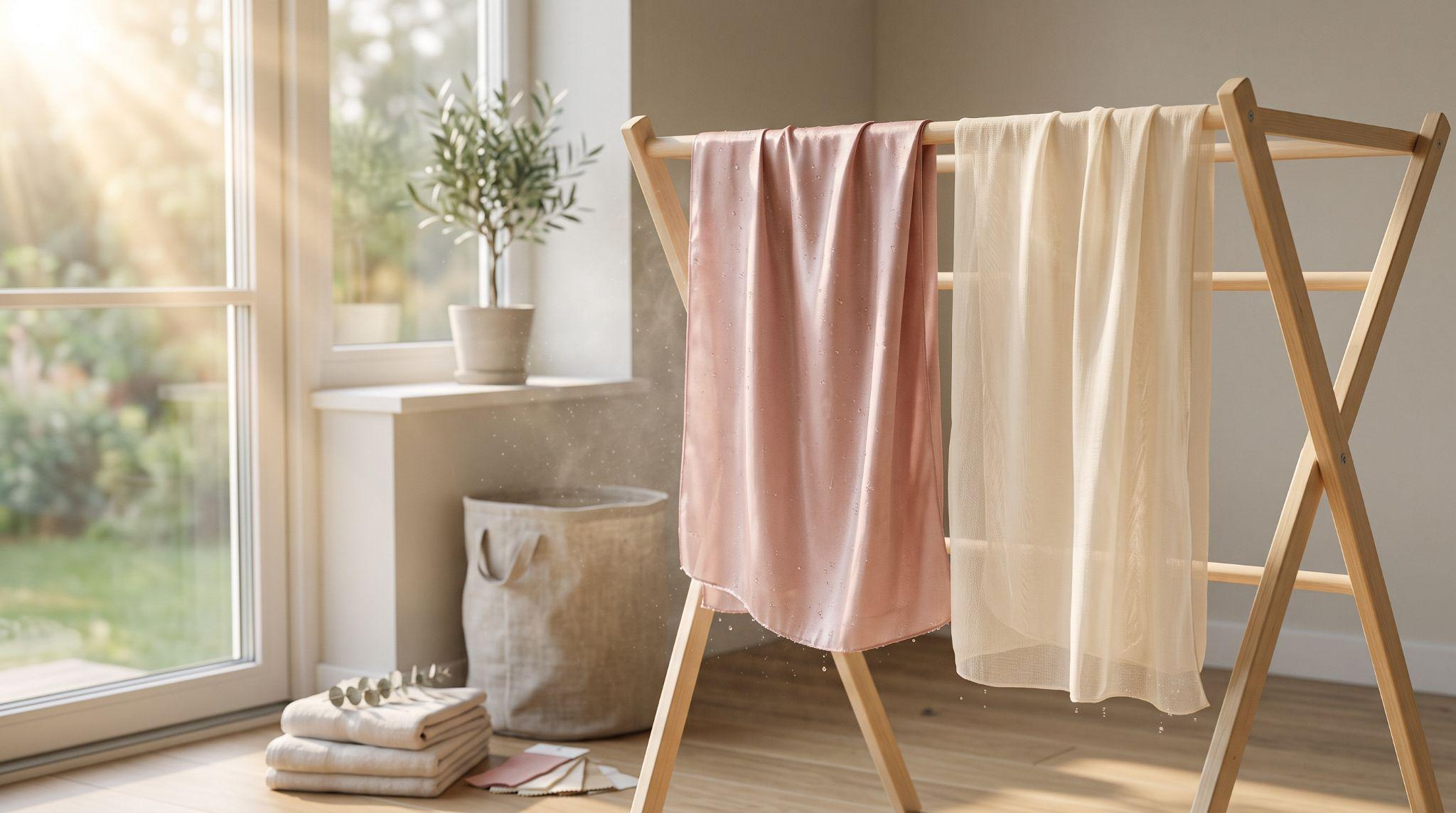
Delicate fabrics, silk and chiffon, do best hand washed in cold water with a mild detergent, then air dried out of direct sunlight to protect the sheen and colour. Low-maintenance fabrics, cotton, twill, and linen, tolerate a gentle machine cycle, though air drying still helps them last longer. Rayon sits in the middle. It can technically be machine washed on a delicate setting, but hand washing keeps it from losing shape over time.
This is a quick overview rather than the full process. For step by step washing, drying, and storage instructions, see the dedicated care guide.
Each product page also carries fabric-specific care notes in its own tab, so if you already own a piece, that’s the fastest place to check instructions for that exact item.
Tudung, hijab, and shawl describe how a piece is worn and shaped, not what it’s made of. ‘A tudung’ is the term most commonly used in Malaysia for an instant or wrapped headscarf. Hijab is the broader term for an Islamic headscarf in general. A shawl, including our Turkish shawls, is typically a longer rectangular piece that can be draped, tied, or wrapped several different ways. Any of the seven fabrics above can appear in any of these three formats, so fabric choice and style choice are two separate decisions.