
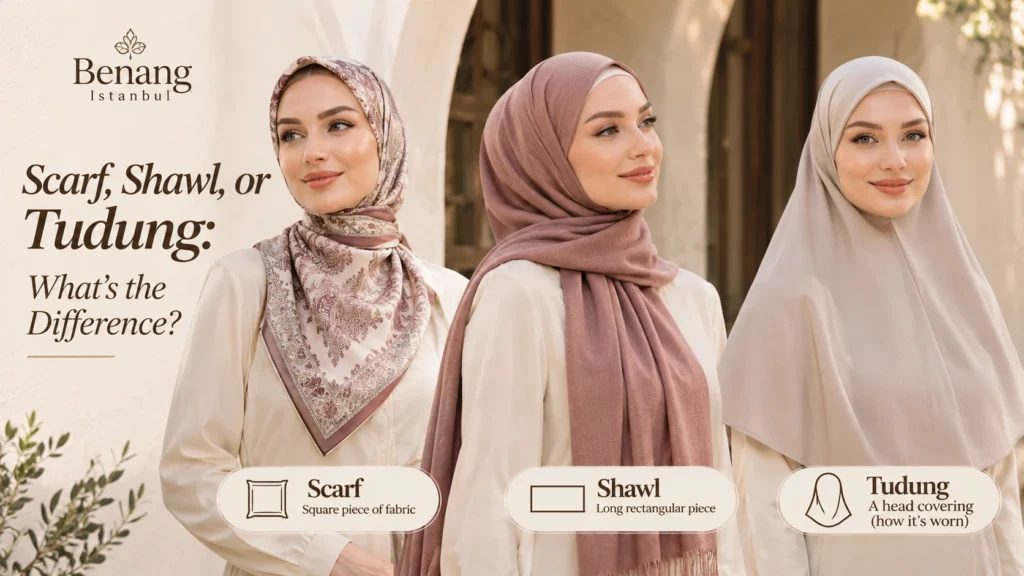
A scarf and a shawl are both pieces of fabric, and what separates them is size and shape. A scarf is smaller and usually square. A shawl is a long rectangle, wide enough to drape over your shoulders. Tudung and hijab are a different kind of word altogether, because they describe a head covering rather than a cut of fabric.
In Malaysia, a scarf or a shawl can become a tudung depending on how you fold and pin it, so for most shoppers the useful question is which shape works for the way you wear yours.
The four terms at a glance
| Term | What it describes | Usual shape | Typical size | Other names |
|---|---|---|---|---|
|
Scarf |
A piece of fabric
|
Square, sometimes a narrow rectangle |
90 x 90 cm for a silk square
|
Eşarp (Turkish), foulard |
|
Shawl |
A piece of fabric |
Long rectangle |
About 180 to 200 cm long, 68 to 70 cm wide |
Selendang (Malay), şal (Turkish)
|
|
Tudung |
A head covering (Malay term) |
Any shape |
Bawal sizes start around bidang 45 |
Tudung bawal, tudung shawl, tudung sarung |
|
Hijab |
A head covering (Arabic-derived term) |
Any shape
|
Not a size term
|
Jilbab, kerudung (Indonesia) |
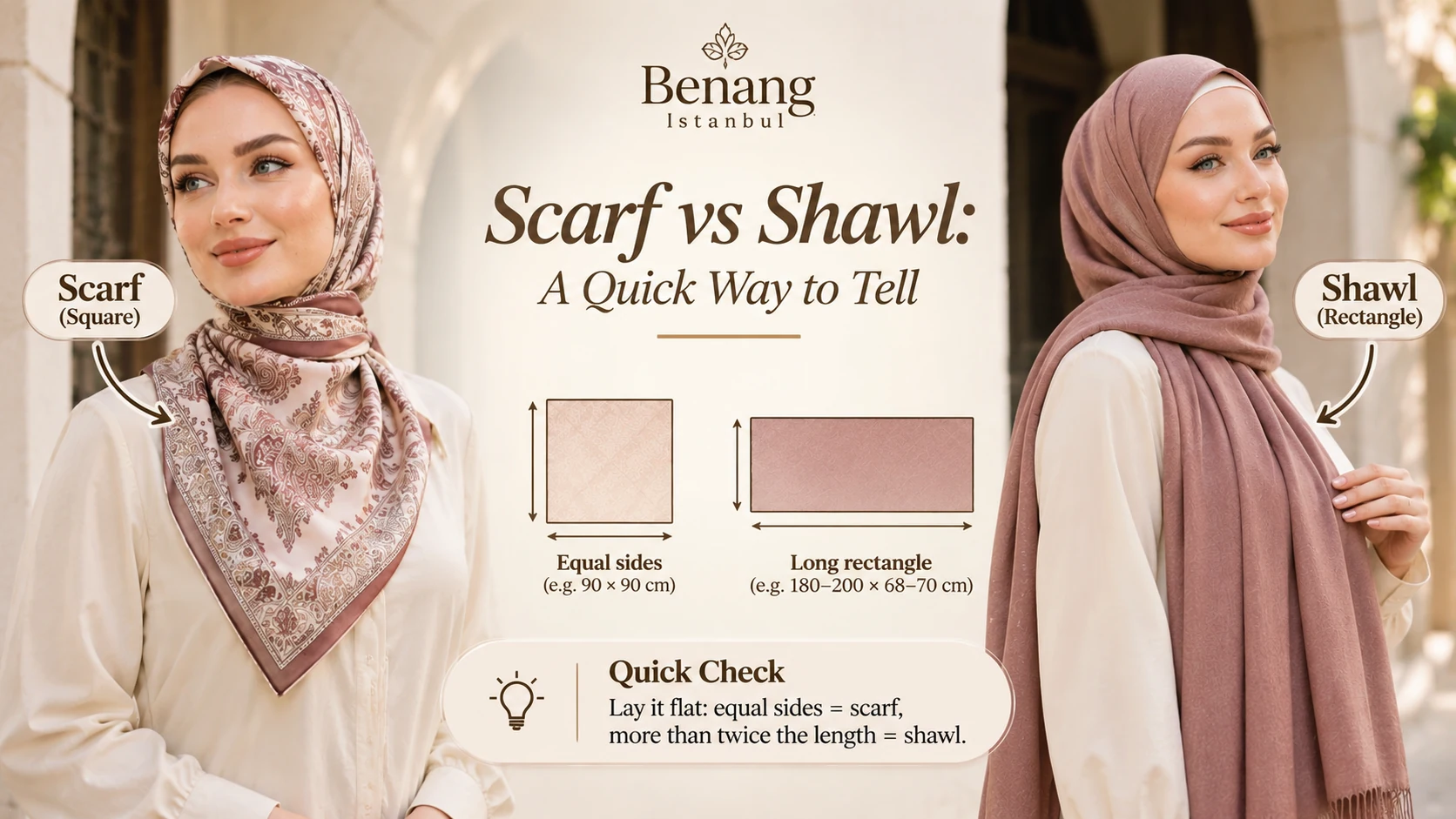
A scarf is the smaller of the two pieces. Square scarves are the classic shape, and silk squares are usually cut at 90 x 90 cm, with smaller 54 cm and 66 cm versions made mostly for tying at the neck. Long, narrow scarves exist too, though they behave more like a neck accessory than something you would wear on your head.
The appeal of a square is how many jobs it can do. The same piece can sit knotted at the neck with an office blouse, get tied around a handbag handle, or be folded diagonally into a triangle and worn as a tudung. In Turkey a square scarf is usually sold as an eşarp, a word you may spot on the label of a Turkish piece.
Our SOFEA scarf from the Armagan Collection is a typical example: 90 x 90 cm of 100% twill silk with hand-rolled edges. The Purple Rania from the Siyane Collection is a little larger at 95 x 95 cm and made of cotton, which makes it the easier pick for daily wear.
A shawl is a long rectangle, generous enough to cover the shoulders or wrap fully around the head and pin in place. Most shawls sold in Malaysia fall somewhere around 180 cm long and 70 cm wide. The traditional Malay word for it is selendang, and in Turkish it is şal.
That extra length is what makes a shawl so flexible as a tudung. You can wrap it loosely, pin it close to the face, let one end fall over the chest for fuller coverage, or skip the head wrap entirely and drape it over the shoulders for an evening event.
Our Khadija Green Twill Silk Shawl measures 198 x 68 cm, which leaves enough length for wrapped styles that still fall below the chest, and the Kehribar collection carries our premium silk shawls.
Lay the piece flat on a bed. If all four sides are the same length, it is a square scarf. If one side is more than twice the length of the other, you are holding a shawl. A stole sits between the two, longer than a scarf but narrower than most shawls. Pashmina technically refers to a fine cashmere wool, although the word is now used for almost any soft rectangular shawl.
Tudung is the Malay word for the headscarf many Muslim women wear in Malaysia, Brunei, Singapore and Indonesia. It describes how the fabric is worn, usually covering the hair and neck, rather than its shape. That is why a Malaysian shop can sell very different products under the same name:
Under most of these, women wear an anak tudung, a fitted inner cap that keeps hair in place and gives the outer fabric something to grip.
Hijab is the Arabic-derived word for the same kind of head covering, used across the wider Muslim world. In a broader sense it can refer to modest dress as a whole, but in shopping terms it nearly always means the headscarf itself.
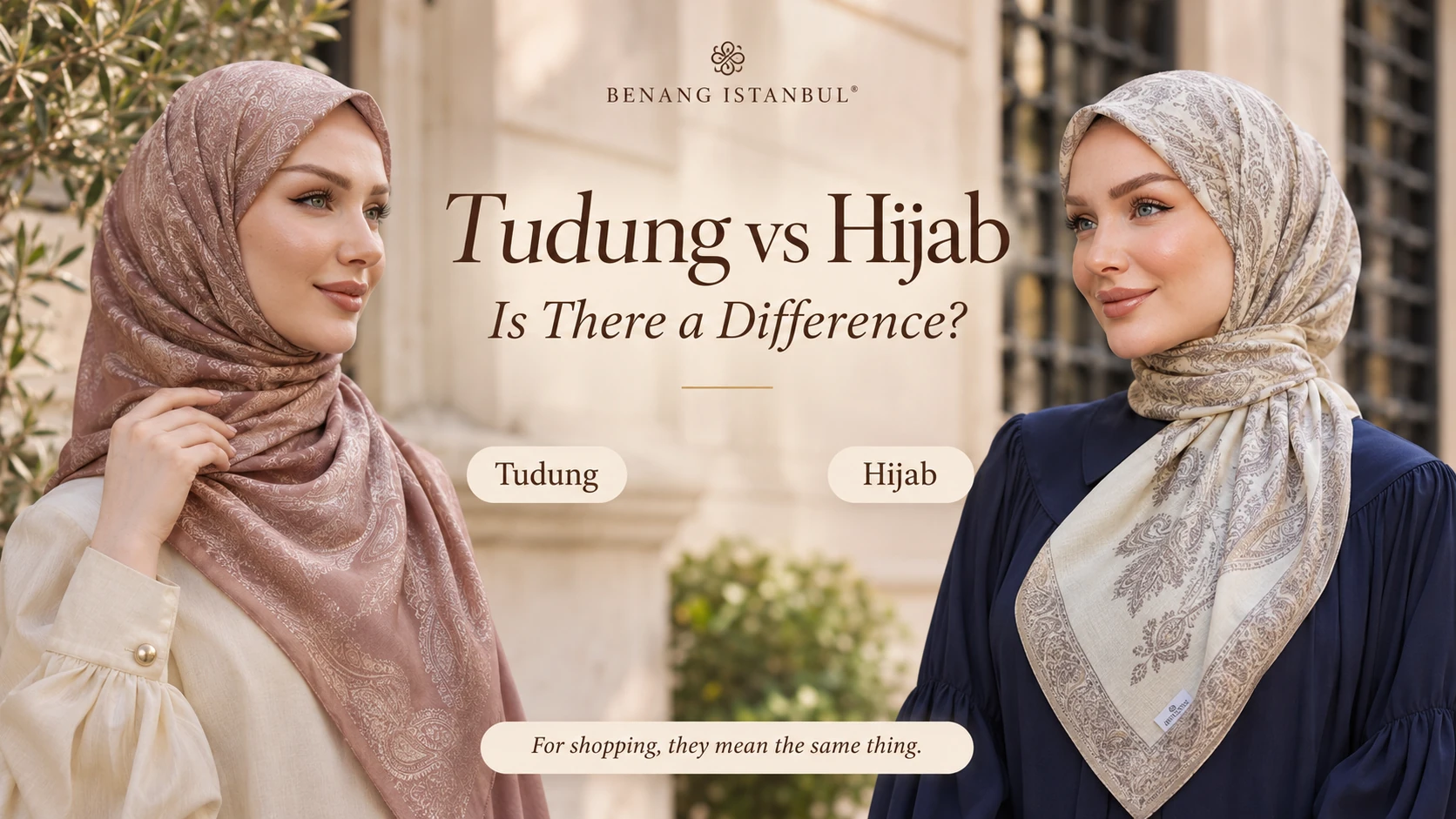
For shopping purposes, no. Tudung is the local Malay term and hijab is the international one, and plenty of Malaysians switch between the two without a second thought. Malay speakers have been using the word hijab more often in recent years, so a shop listing hijabs and one listing tudung are selling the same category of product. In Indonesia you will also hear jilbab and kerudung for the same thing.
The difference worth paying attention to is the product type underneath the label. A bawal and a shawl fit and cover very differently, whatever a shop decides to call them.
Yes, both work. They suit different styles, though, and size is where most people get caught out.
A square scarf is worn the same way as a bawal. Fold it corner to corner into a triangle, place it over an anak tudung, and pin it under the chin. The catch is the measurement. Most Turkish square scarves, ours included, are 90 to 95 cm, which is noticeably smaller than a bidang 45 bawal at around 115 cm. Folded into a triangle, a 90 cm square sits higher and ends around the neck and upper chest instead of falling over it.
That shorter drape suits plenty of looks. It sits neatly when tucked into a high-neck top, it works for the Turkish style with a crisp point at the forehead, and it is comfortable for anyone with a smaller frame who finds a bidang 45 overwhelming. If you prefer a labuh style that covers the chest, go for a shawl instead.
A practical tip before you buy a square: measure one side of a bawal you already enjoy wearing. If it is 115 cm and you are happy with the coverage, expect a 90 cm scarf to cover noticeably less, since you are working with about 25 cm less fabric on every side.
A shawl needs no folding. Wrap and pin it, then use the extra length however you like. If you are new to wrapping, our guide to 5 ways to tie a Turkish shawl walks through the main methods step by step.
Shape decides the style, but fabric decides how comfortable you are by 3 pm, so think about both. Our guide to Turkish scarf fabrics and how each one behaves covers the fabric side. A few starting points:
If you are still unsure which size suits the way you wear your tudung, send us a WhatsApp at 017-661 4342 with the style you usually go for and we will point you to the right piece.
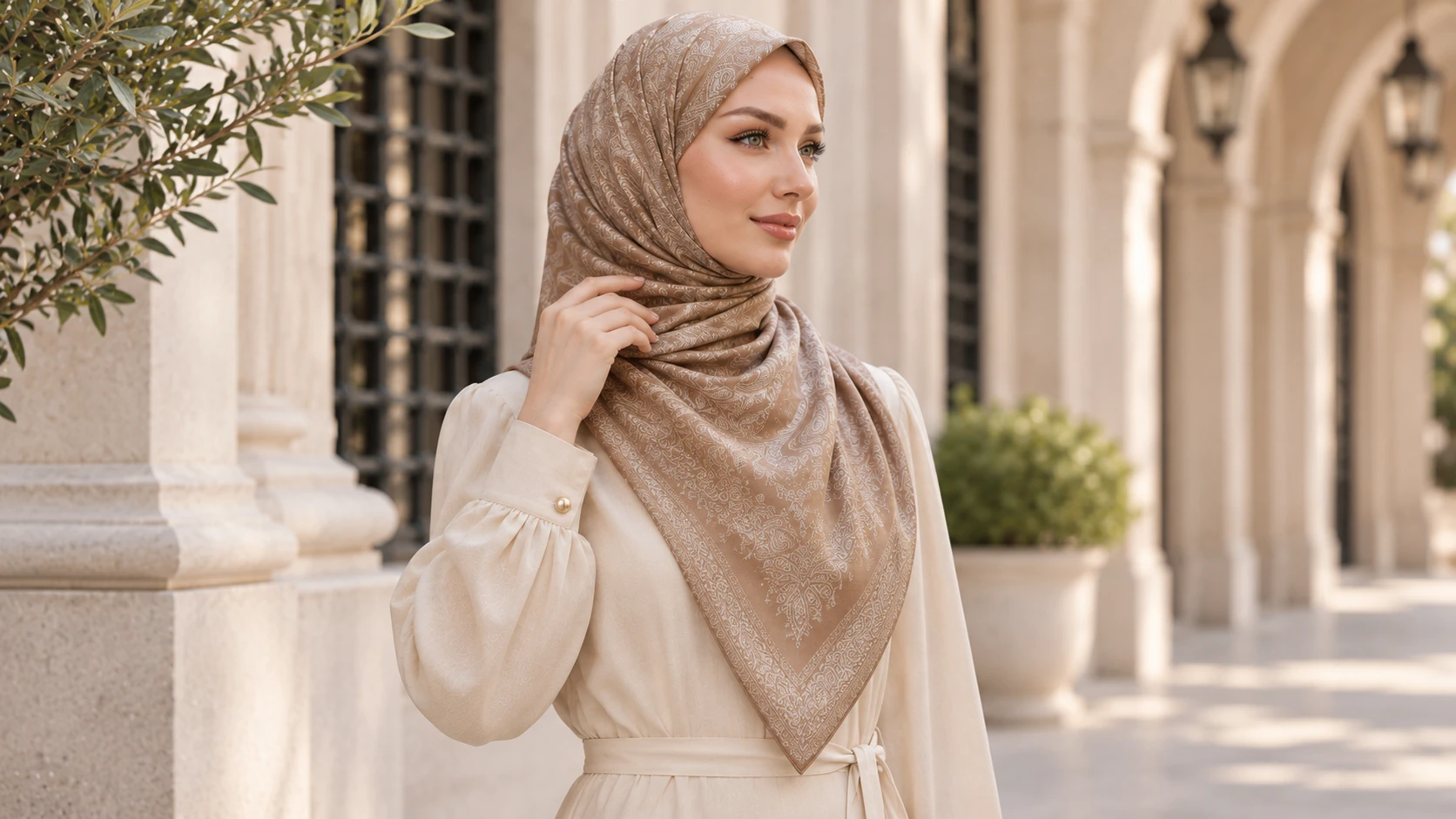
Because our scarves and shawls come from Turkey, a few Turkish terms turn up on labels and in product photos. Eşarp usually marks a square scarf, often silk, and şal means shawl.
You may also come across yazma, a lightweight traditional square of cotton or silk, often printed and finished with oya, a fine needle-lace trim along the edge. If you are buying silk and want to be sure of what you are paying for, our guide on how to spot real silk before you buy covers the checks that actually work.