Home / Fabric Care / 5 Ways to Tie a Turkish Shawl

5 Ways to Tie a Turkish Shawl

5 Ways to Tie a Turkish Shawl

A Turkish shawl’s rectangular shape makes it genuinely versatile, the same piece can become an everyday hijab wrap, a draped pashmina-style layer, or a styled neck accessory depending on how you tie it. Below are five practical methods, plus what to do if yours keeps slipping.

Five Ways to Tie a Turkish Shawl

1. The Classic Wrap-Around Hijab Style

The most everyday, secure option, good for a full day out.


  • Drape the shawl over your head so one side hangs slightly longer than the other.
  • Bring the longer side across the front, under the chin, and pin it at the opposite shoulder.
  • Take the shorter side and wrap it around to the back, then bring it forward and pin or tuck it to secure.
  • Adjust the front drape for coverage and let the remaining length fall naturally over the shoulder.


Works well in most fabrics, cotton or crepe hold this style with the least adjusting through the day.

2. The Draped Shoulder Style (Pashmina-Style)

A looser, non-wrapped option for cooler indoor settings or an evening layer, closer to how a pashmina shawl is traditionally worn.


  • Drape the shawl evenly across both shoulders, letting it hang loosely without pinning.
  • Cross the two ends loosely at the front, or let them hang straight down for a simpler look.
  • If it’s slipping off your shoulders, a single small pin at the front centre holds it in place without changing the drape.


A fluid fabric like silk suits this style best, since the drape is the whole point and stiffer fabrics won’t fall as softly.

3. The Front-Knot Turkish Style

A distinctive knotted front, easy to do and good for a slightly more polished look.


  • Wrap the shawl around your neck and shoulders with both ends hanging evenly at the front.
  • Tie the two ends together in a simple knot a few inches below the chin.
  • Loosen or tighten the knot to adjust how snug the wrap sits, and fan out the ends below the knot for a fuller look.


Lightweight fabrics like chiffon knot easily without adding bulk at the front.

4. The Layered Drape for Extra Hold

Built specifically to resist slipping through a long or active day.


  • Start with an underscarf or inner cap for grip before adding the shawl.
  • Wrap the shawl snugly rather than loosely, pinning at both the chin and one shoulder rather than just one point.
  • Add a small pin at the back of the head where the two layers overlap, this hidden third pin is what most tutorials skip and it’s the difference between a wrap that holds all day and one that needs constant adjusting.


This method is worth pairing with a fabric that already grips well, like twill or crepe, for the most secure result.

5. The Loose Bohemian Drape

A relaxed, minimal-pinning option for a casual day.

  • Drape the shawl loosely over the head and shoulders without pulling it tight anywhere.
  • Let one end hang longer than the other rather than balancing them evenly.
  • Use a single pin at the shoulder only if needed, the loose, slightly undone look is the point of this style.

Linen’s texture and slight structure actually help this style hold its relaxed shape without looking sloppy.
choosing-the-right-style-for-your-day

Choosing the Right Style for Your Day

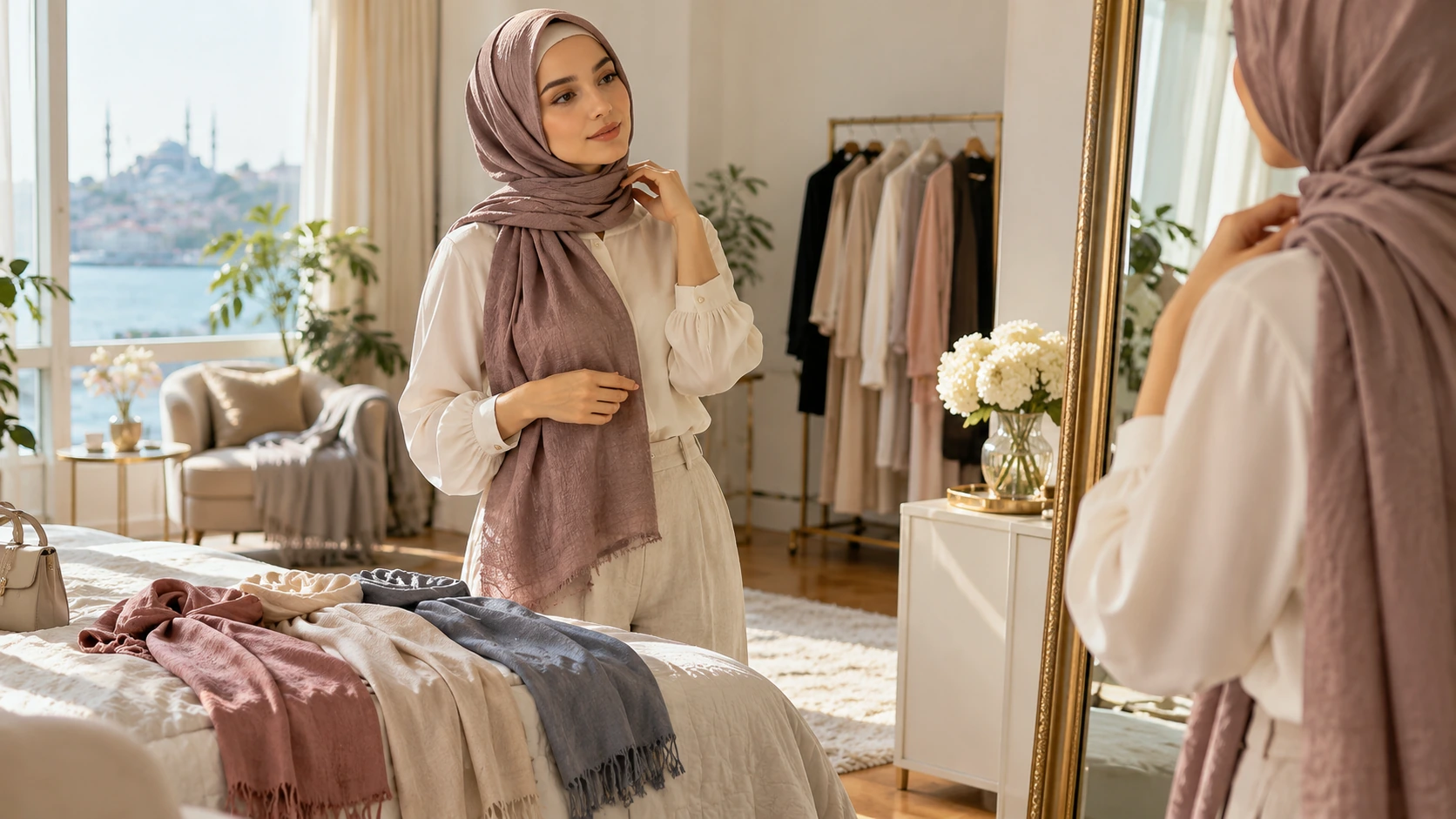
  • Long day out, errands, work: the classic wrap-around, method one, for the most secure hold.
  • Cool indoor setting or evening event: the draped shoulder style, method two, for a softer, more elegant look.
  • Want a bit more polish without much effort: the front-knot style, method three.
  • Active day, outdoor event, or humid weather: the layered drape, method four, for the least readjusting.
  • Casual, relaxed day: the loose bohemian drape, method five.

How to Style a Silk Scarf as an Accessory

A silk scarf earns its keep beyond wrapping. Tied around a bag handle, it adds a quick pop of colour to a plain bag. Knotted loosely around the neck over a plain outfit, it works the same way a piece of jewellery would. Threaded through belt loops in place of a belt, or tied around a ponytail or bun, it turns one scarf into several different accessories depending on the day.


To keep those styling options looking polished, proper care matters just as much as the way you tie it. Our guide to caring for a silk scarf explains how to wash, dry, and store silk without damaging its shape or finish.
why-does-my-hijab-keep-slipping

Why Does My Hijab Keep Slipping?

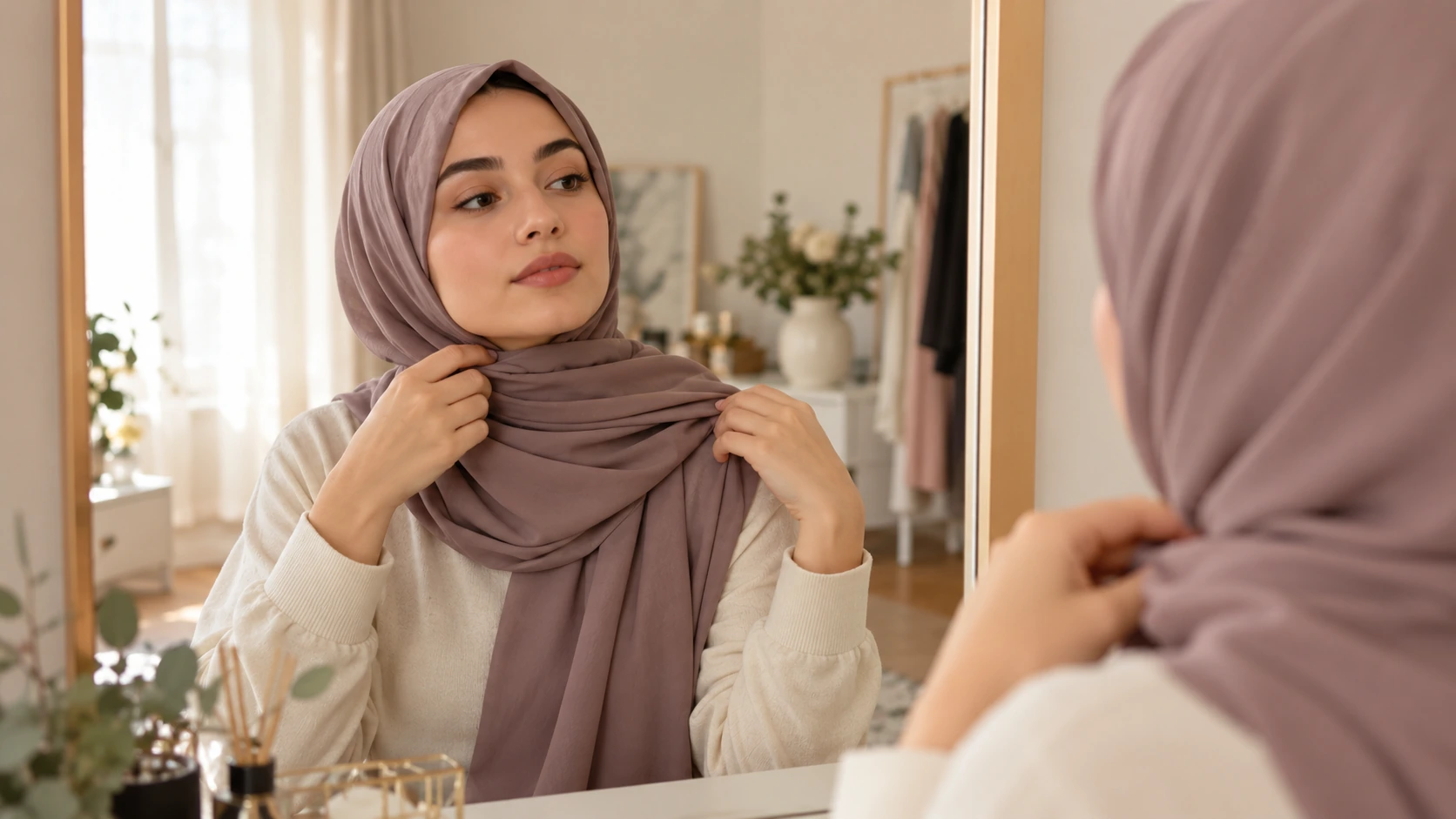
Slipping usually comes down to one of three things: the fabric, the underlayer, or the pinning. Smoother, more slippery fabrics like silk and lightweight chiffon naturally hold less well on their own than a textured fabric like crepe, which grips itself and stays put with less effort. 


If staying power is a priority, it also helps to understand which hijab fabrics hold their shape best, since texture and structure can make a noticeable difference throughout the day.

An underscarf or inner cap in a grippier material gives any fabric something to hold onto, which matters more than most people expect. And pin placement matters as much as pin count, a single pin in the wrong spot won’t do as much as two pins placed where the fabric actually wants to shift, typically the chin and one shoulder at minimum.


In hot, humid conditions, moisture can make slipping even worse. If you live in a tropical climate, our guide to the best hijab fabrics for Malaysia’s humidity explains which materials stay lighter, cooler, and easier to manage.

Square Scarf vs Rectangular Shawl: A Quick Note

Folding a square scarf into a hijab usually means folding it diagonally into a triangle first, since a square shape needs that fold to drape correctly. A rectangular Turkish shawl skips that step entirely, it’s already the right shape to wrap directly using any of the five methods above, which is part of why it’s a simpler starting point if you’re new to wrapping.

FAQs

Why does my hijab keep slipping?

Usually a combination of a slippery fabric, no underscarf for grip, or pins placed in the wrong spot. A textured fabric like crepe, a grippy underscarf, and two well-placed pins solve most slipping issues together.

How do you wear a pashmina shawl?

Drape it evenly across both shoulders without wrapping tightly, and either let the ends hang loose or cross them lightly at the front. A single pin at the centre front helps if it keeps sliding off your shoulders.

What's the best way to tie a scarf around your neck?

A simple front knot, wrap it around your neck with both ends even, then tie a loose knot a few inches below the chin, works for most rectangular shawls and needs no pins at all.

CATEGORIES

SHARE THIS GUIDE