The fastest checks are the sheen, the sound it makes when you rub it between your fingers, and the price relative to what real silk normally costs to produce. None of these alone is proof, but run two or three together and you’ll have a reliable answer. This guide walks through each method in detail, plus the terminology that trips most buyers up, like the difference between silk as a fibre and satin as a weave.
Polyester manufacturers have gotten very good at mimicking silk’s shine, and the confusion is made worse by the word satin, which describes a weave, not a fibre. A fabric can be silk satin, which is real silk woven for extra shine, or polyester satin, which is a synthetic imitation with none of silk’s breathability or durability. Both get called “satin” in casual conversation, which is exactly why a glance isn’t enough and you need at least one physical or contextual test to confirm what you’re actually looking at.
Real silk has a complex, slightly muted sheen that changes character as you tilt it under light, sometimes looking almost pearly, sometimes deeper in tone. Polyester tends to reflect light in one flat, uniform way regardless of angle, which is what gives cheap imitations that slightly plasticky shine even in photos.
Rub a section of the fabric between your fingers or against itself. Genuine silk produces a soft, distinctive rustle sometimes called scroop, and it feels warm rather than cool the moment you touch it, since silk is a poor conductor of heat. Polyester tends to feel cool and slightly slick right away, and makes little to no sound when rubbed.
Silk is measured by momme weight, roughly how many pounds a standard bolt weighs, and most scarf-weight silk falls in a range that feels surprisingly heavy and fluid for how thin it is. If a scarf feels papery, stiff, or unusually light for its size, that’s worth a second look. Real silk pools and drapes rather than holding a stiff shape when you let it hang.
A well-known informal check: try pulling a lightweight silk scarf through a plain ring, roughly the size of a wedding band. Real silk is fine and smooth enough that a full-sized lightweight scarf can often slide through cleanly, while polyester tends to catch, bunch, or simply be too thick to pass. It isn’t foolproof, heavier silk weaves like crepe or twill won’t always pass this way, but for lightweight silk chiffon or habotai, it’s a fast, non-destructive check you can do while still in the shop.
This is the most reliable home test, but it only makes sense on something you already own, since it destroys a small piece of thread. Snip a few millimetres of loose thread from a hem or seam allowance, hold it with tweezers over a sink or non-flammable surface, away from anything flammable, and touch a lighter to the end briefly.
Real silk curls away from the flame, singes rather than melts, smells like burnt hair, and leaves behind a crushable black ash. Polyester melts instead of burning, smells like burning plastic, and forms a hard bead that cools into a small lump. This single test settles the fibre question more reliably than sheen or feel alone.
Silk is labour-intensive to produce, from raising silkworms to reeling and weaving the thread, and that cost shows up in the retail price. If a listing advertises “100% silk” at a price that undercuts typical silk pricing significantly, treat that as a warning sign worth investigating rather than a lucky find. It doesn’t automatically mean the listing is dishonest, blends and lower grades exist, but it’s reason enough to check the other signals before buying.
Chiffon and satin describe how a fabric is woven, not what it’s made from. Silk chiffon is real silk woven into a sheer, lightweight structure, which is why it can be both breathable and genuinely silk at the same time. Silk satin is real silk woven with more threads facing one direction, giving it that glossy front and matte back.
The confusion comes from the fact that polyester versions of both exist and are marketed with the same names, so “chiffon” or “satin” on a label tells you about the weave, never the fibre. Always look for the fibre content separately.
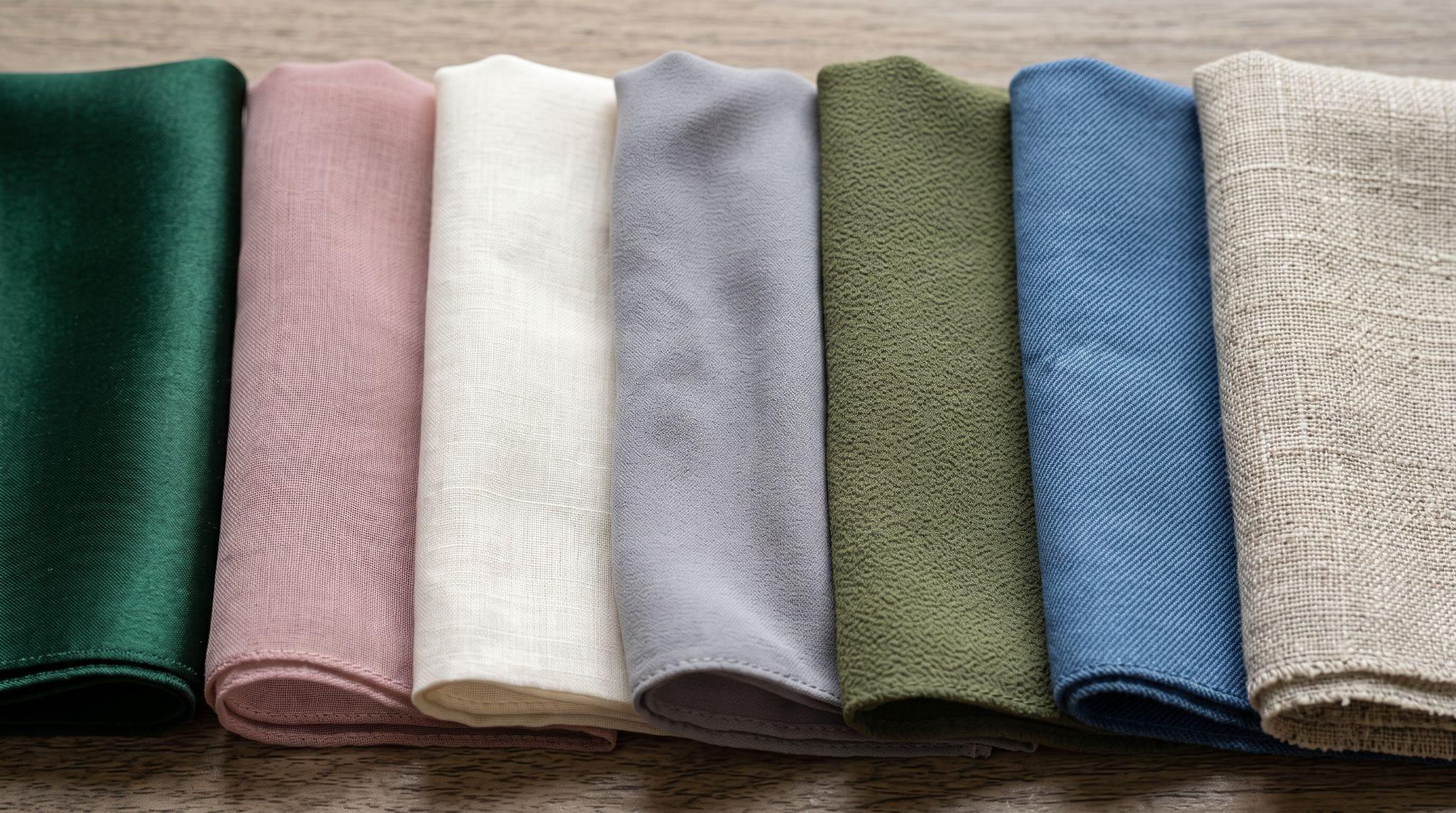
Silk is a natural protein fibre with a smooth structure that resists dust mites and doesn’t trap moisture the way some synthetics do, which is why it’s often recommended for sensitive skin. That said, fabric sensitivity varies from person to person, so silk being generally gentle isn’t a guarantee for every individual case.
Real silk does have sheen, just a softer, more complex one than the flat gloss of polyester. Shine on its own doesn’t disqualify a fabric from being genuine; it’s the quality and consistency of that shine that matters, not its presence.
Silk does wrinkle, just less than linen or cotton. Pulling a scarf taut and expecting zero creasing isn’t a reliable test on its own, and treating a few soft creases as proof of a fake will rule out plenty of genuine pieces.
Price is a useful red flag when it’s suspiciously low, but a high price alone doesn’t guarantee authenticity either. Some sellers mark up synthetic blends to match real silk pricing. Price works best combined with the other checks in this guide, not relied on by itself.